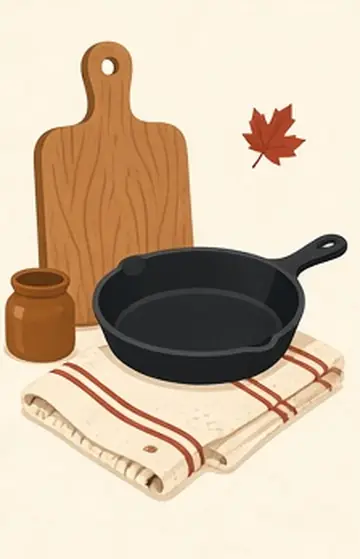
 Kitchen
Larch Wood Canada
End-grain cutting boards
Made in Canada (brand's claim)
"Everything is handmade in our facility on Cape Breton Island"
The Amazon button is an affiliate link; the maker link is a plain link. No price shown.
Maple leaves sell. They do not, by themselves, prove where a product was made. Canada’s Competition Bureau publishes enforcement guidelines explaining when “Product of Canada” and “Made in Canada” claims for non-food goods are unlikely to raise false or misleading representation concerns. This guide translates those ideas into a shopper checklist you can actually use.
PlazaMarket’s short page How we check origin explains our badge method. This article is the deeper companion.
Important limits
| Phrase | What it usually signals | What it does not automatically mean |
|---|---|---|
| Product of Canada | Very high Canadian content threshold in Bureau guidance for non-food goods | That every raw input grew in Canada (costs test + substantial transformation) |
| Made in Canada | Last substantial transformation in Canada + majority Canadian direct costs, with a qualifier about imported content | That the brand is Canadian-owned, or that 100% of parts are domestic |
| Canadian-owned | Ownership of the company | That manufacturing happened in Canada |
Treat each as a separate fact. A Canadian-owned brand can import finished goods. A foreign-owned company can manufacture in Canada. PlazaMarket shows those badges separately for that reason.
Source: Competition Bureau, “Product of Canada” and “Made in Canada” Claims (enforcement guidelines, opened 7 November 2026). The Bureau says it does not approve or certify these claims.
The Bureau generally will not challenge a “Product of Canada” representation if:
Generally not challenged if:
Substantial transformation means a fundamental change in form, appearance, or nature so the goods after the change are new and different from what existed before.
Direct costs in the guidelines focus on materials and labour reasonably allocated to production—not casual marketing slogans.
The Bureau recommends more specific wording that matches the real activity—for example “Assembled in Canada with foreign parts” or “Sewn in Canada with imported fabric”—provided the overall impression is not misleading.
The Bureau also says more general words such as “produced in Canada” or “manufactured in Canada” are likely to be read by consumers as meaning “Made in Canada,” so they should meet the Made in Canada conditions.
Pictures matter: a Canadian flag or maple leaf can create a “Made in Canada” general impression even without those words. Qualifiers must be clear enough that shoppers notice them.
Use the printable origin-label verification checklist. In short:
These illustrate how to read, using makers already listed on PlazaMarket. Claims below are the brands’ own words as quoted on PlazaMarket product cards (reviewed 3 November 2026). We don’t verify whether any product meets the Bureau’s cost tests.
PlazaMarket is operated by Ytronic Corp. Some product pages include Amazon.ca links marked as affiliate links; commissions may be earned at no extra cost to you if you buy through them. Right now, those Amazon buttons are the only affiliate links, as described on the Disclosure page. This guide does not depend on a purchase. No brand pays for a badge upgrade.
Is a maple leaf logo enough?
No. The Bureau evaluates general impression; a leaf can imply Canadian origin and may be assessed like a Made-in-Canada claim if that is the impression created.
Does “Canadian-owned” mean made here?
No. Ownership and manufacturing are different badges on PlazaMarket for that reason.
Can PlazaMarket prove the 51% or 98% cost tests?
No. Only the business has its cost accounting. We quote and date public claims.
Next step: Pick one product you own or plan to buy, fill in the printable origin checklist, and compare the hangtag wording to the brand’s about page—not an influencer caption.
Kitchen"Everything is handmade in our facility on Cape Breton Island"
The Amazon button is an affiliate link; the maker link is a plain link. No price shown. Outdoor and Sports
"Genuinely made in Canada. Not just Canadian-owned."
The brand runs a separate "Made in Canada" collection; pick items from it.
The Amazon button is an affiliate link; the maker link is a plain link. No price shown.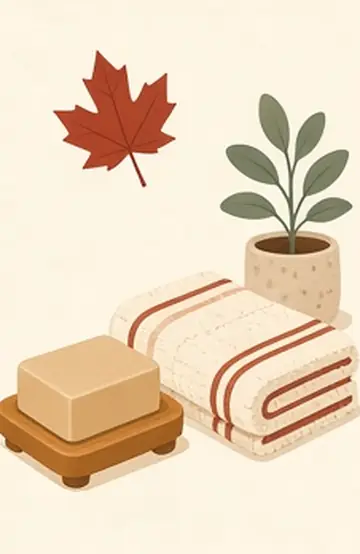 Personal Care
"We rely on simple, natural ingredients in our handmade-in-Canmore soap."
The Amazon button is an affiliate link; the maker link is a plain link. No price shown.